Prospecting
How to prospect when most of your outreach goes unanswered

Arnaud Caillot · 6 min read
In short
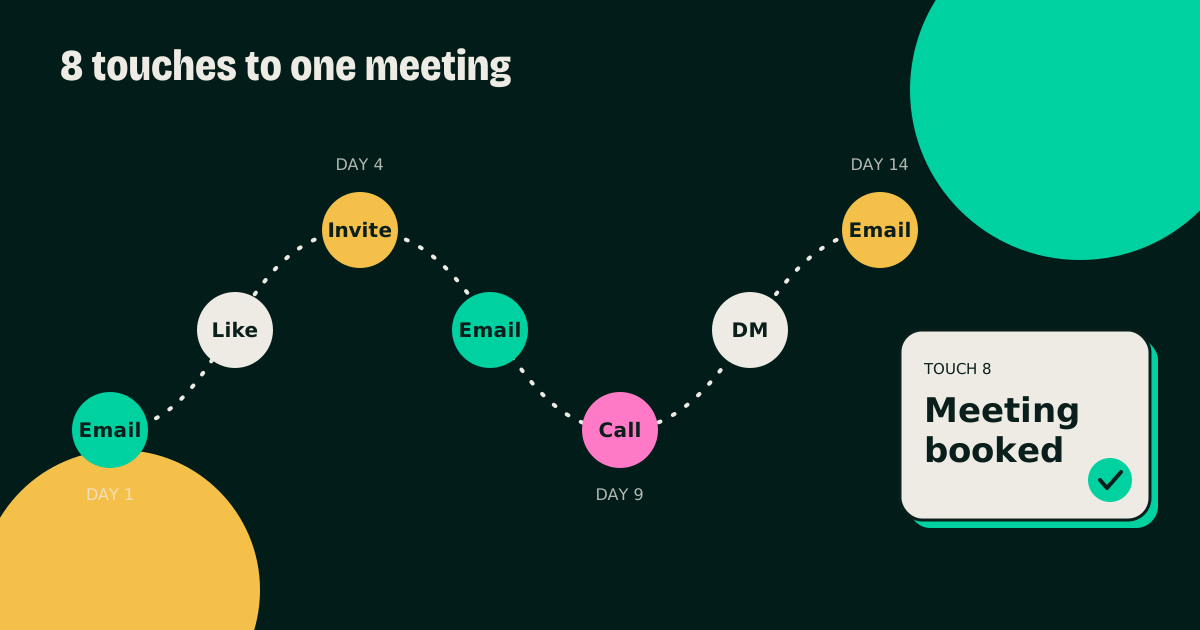
- It takes about 8 touches on average to book a first meeting with a new prospect. The best performers get there in about 5.
- Most reps hate prospecting, and the time goes on research and typing, not on talking to people.
- What helps: choose who to contact first, write to them for a real reason, follow up on a plan, and stop when the answer is no.
- Software can do the grunt work. A person should still decide what goes out.
Why prospecting feels broken
Ask a room of sales reps what they like least about the job and you won't wait long for the answer. Salesforce's 2026 State of Sales report says nearly half of reps name cold calling as the worst part of their job. The same report finds the average seller spends only about 40% of their time actually selling.
Beetoo, our co-founder and a former account executive at Mentimeter, says it more bluntly:
"Almost all sales reps do not like prospecting, outreach and repetitive tasks to progress customers to closed won."
Beetoo Ieru, Co-founder, Quickpipe AI
And yet pipeline starts here. No prospecting, no meetings. No meetings, no deals. So the job is not to love it. The job is to make it smaller, smarter and less painful.
How many touches does it take to book a meeting?
RAIN Group's research on sales prospecting found it takes an average of 8 touchpoints to get an initial meeting with a new prospect. Top performers need about 5.
A touch is any attempt to reach someone: an email, a call, a LinkedIn message, a voicemail. Eight of them, for one meeting, with one person.
Two things follow from that.
First, one email and a "just checking in" is not prospecting. It is the start of it. Most prospects don't answer the first message, and that tells you very little about them.
Second, eight touches by hand is a lot of work. Multiply it by a few hundred leads and you can see why reps drop off after a message or two, and why the time disappears.
The gap between 8 and 5 is the interesting part. Top performers don't send more. They reach out to better-chosen people, with a better reason to write.
What good prospecting looks like
Here is what we have seen work, from our own years in sales at Mentimeter and from talking to sales teams.
1. Decide who first, not who next
Most lists are too long. Ten leads you chose carefully beat a hundred you didn't. Before you write anything, ask who is most likely to care right now.
Good reasons to rank someone higher: they match your ideal customer, they work at a company that just hired or raised, or they are already using your product. If you sell a product-led tool, the last one is the strongest signal you will ever get.
2. Write for a real reason
"I came across your profile" is not a reason. A reason is something specific and true: they just opened a new office, they posted about a problem you solve, their team started using your free plan last week.
One concrete line, followed by one clear ask, does more than three paragraphs about your company. If you can't find a real reason for a lead, move them down the list.
3. Plan the follow-ups before you send the first message
Since it takes several touches, decide up front what they are. A simple pattern: an email, a LinkedIn connection, a second email with something useful, a call, a short last note. Spread them over a few weeks and change the channel and the angle each time. Don't just resend the same message.
4. Know when to stop
A no is useful. So is silence after a full sequence. Mark the lead, move on and come back in a quarter if something changes. Chasing the same person for months wastes your time and hurts your reputation.
What to hand to software
Look at where the hours go: finding leads, checking who they are, drafting a first line, keeping track of who needs a follow-up today, updating the CRM. None of that is the part where a rep is good. The parts where a rep is good are the conversation, the judgment call and the relationship.
So a sensible split is to let software do the finding, the first draft and the bookkeeping, while a person decides who to contact and what to say. We don't believe in fully automated outreach. It reads as spam, and people can tell.
This is how we built Koa Reach. You describe the customers you want, and Koa searches a database of 200M+ contacts, suggests who to contact first and drafts the messages. Nothing goes out until you switch the sequence on.
If you sell a product people can try for free, Koa Signals does the same thing from your own product usage, so you can see which free users look ready to talk. You can read how both work on the Quickpipe AI homepage.
Written by Arnaud Caillot, co-founder of Quickpipe AI.
Sources: Salesforce, State of Sales 2026 · RAIN Group, How many touches does it take to make a sale
Frequently asked questions
How many follow-ups should I send?
There is no magic number. RAIN Group's research points to about 8 touches on average across channels to get a first meeting. Plan a sequence of that rough size over a few weeks, then stop. Your own data is better than any benchmark, so track which touch gets replies and adjust.
Is cold outreach dead?
No, but lazy cold outreach is. Generic messages sent to huge lists get ignored. Short messages with a specific reason, sent to people who fit, still work.
What is the difference between prospecting and lead generation?
Lead generation usually means attracting people to you, with content, ads or a free product. Prospecting means going to them. Most sales teams need both, and the best signal is often a mix: someone who already tried your product and also fits your target customer.
How do I prospect without spending all day on it?
Block a fixed slot, work a short ranked list, and let tools handle research and drafting. The goal is fewer, better conversations, not more activity.
Should I use AI for prospecting?
Yes for the repetitive work, no for the final say. Use it to find leads, draft messages and track follow-ups. Read what it wrote before it goes out.
Arnaud Caillot
Co-founder, Growth at Quickpipe AI
Ex-Mentimeter and Soundtrack Your Brand. 15+ years of B2B, B2C and PLG growth. Writes about prospecting, outreach and how small sales teams build pipeline.
More from ArnaudArnaud Caillot on LinkedIn